Very close to the city of Siem Reap in Cambodia lies the city of Angkor. Although not listed among the Seven Wonders of the World, Angkor and its temples are widely recognized as the eighth wonder of the world. A unique place to visit during your trip to Cambodia. Here is a summary of this priceless cultural heritage site, a must-see at least once in a lifetime, and a suggested itinerary for a day trip.
This is why the city of Angkor was well and truly lost and forgotten for 500 years before the arrival of the first Western explorers who brought it to public attention through their accounts throughout the world. West.
These Khmer cities, sprawling across thousands of hectares in the Cambodian jungles, were built at the behest of the kings of old.
The city of Angkor dates back to the 9th century and its development extended into the 14th century. This immensely large site was discovered in the 19th century. Therefore, it wasn’t that long ago compared to when this city was still in use.
The first was Jayavarman II, the one who united the various Cambodian peoples who had previously been divided into several provinces. He established the capital at Angkor, near Siem Reap and the great Tonlé Sap lake, for rice cultivation and fishing. Each king added to the structure by building, in turn, a temple dedicated to the gods, which the people then joined. This organization legitimized the rulers’ authority and fostered a vibrant social and economic life in each city.
The documents updated today indicate the names of 39 kings who are said to have reigned over Angkor. Since each reign marked the beginning of a new city’s history, several temples and towns were built on the Angkor site. This explains the architectural differences between certain temples and their evolving religious symbols, even though Hinduism remained the dominant religion over the years. Among these rulers, some left a particularly strong mark on Angkor’s history, notably Suryavarma II, the builder of the famous Angkor Wat, and Jayavarma VII, the great architect who brought Khmer culture and art to the forefront through the Bayon at Angkor Thom.
The decline of This Khmer empire had several reasons, notably meteorological ones with long periods of drought and monsoons, but also because of the conquering threat of the Kingdom of Siam, which surely accelerated the Khmers’ decision to leave Angkor for Phnom Penh. The Angkor site retains all its splendor today and is among the best-preserved historical sites in history. However, despite the protection afforded by its UNESCO World Heritage status, this wonder of the world has greatly suffered from the ravages of war and looting and continues to suffer from mass tourism.
Fortunately, international support and government assistance allow this treasure to continue to amaze us through the ages.
Spending a day at Angkor is an incredible experience, undoubtedly one you will never forget. To make such a visit, as the site is immensely large and includes hundreds of temples, several options are available. The Asiajet.com team tested a day trip to Angkor and shares their itinerary with you.
Start with a sunrise over one of the most impressive temples on the site: Angkor Wat. Get up at 5:00 AM in the middle of the night and head there to arrive around 5:30 AM to see the different hues of the sky as the sun gradually rises. Enjoy a few cool minutes before the sun fully rises, allowing you to begin your visit to Angkor Wat. A visit to this monument, which has become a symbol of Cambodia, is exceptional. It will take some time due to the sheer size of the site and its many corridors, courtyards, facades, and viewpoints. Angkor Wat will give you a sense of the grandeur the Khmer Empire once achieved, allowing you to fully appreciate your visit to the other temples. Angkor Thom is one of the most famous sites in Angkor. The area is quite large and includes several temples, each as impressive as the next. To enter the city, the team first passed through the South Gate, walked along the entire basin encircling the city, and then reached the South Gate. The gates alone will give you a glimpse of the site’s splendor. Continue your visit to the Baphuon, a temple within the city walls, completely rebuilt after its total destruction during the war. Its main walkway, elevated by hundreds of pillars, will lead you into the heart of the pyramid-shaped main building, where each level is connected by very steep staircases. Next, head to the Terrace of the Elephants, a terrace stretching over 300 meters, where you can admire the frescoes carved into its walls. Finally, visit the city with the Bayon. As famous and admired as Angkor Wat, the Bayon of Angkor Thom is an imposing temple adorned with numerous faces depicting the ancient king who built it. There are exactly 216 faces, which you will see on the 54 towers of the structure.
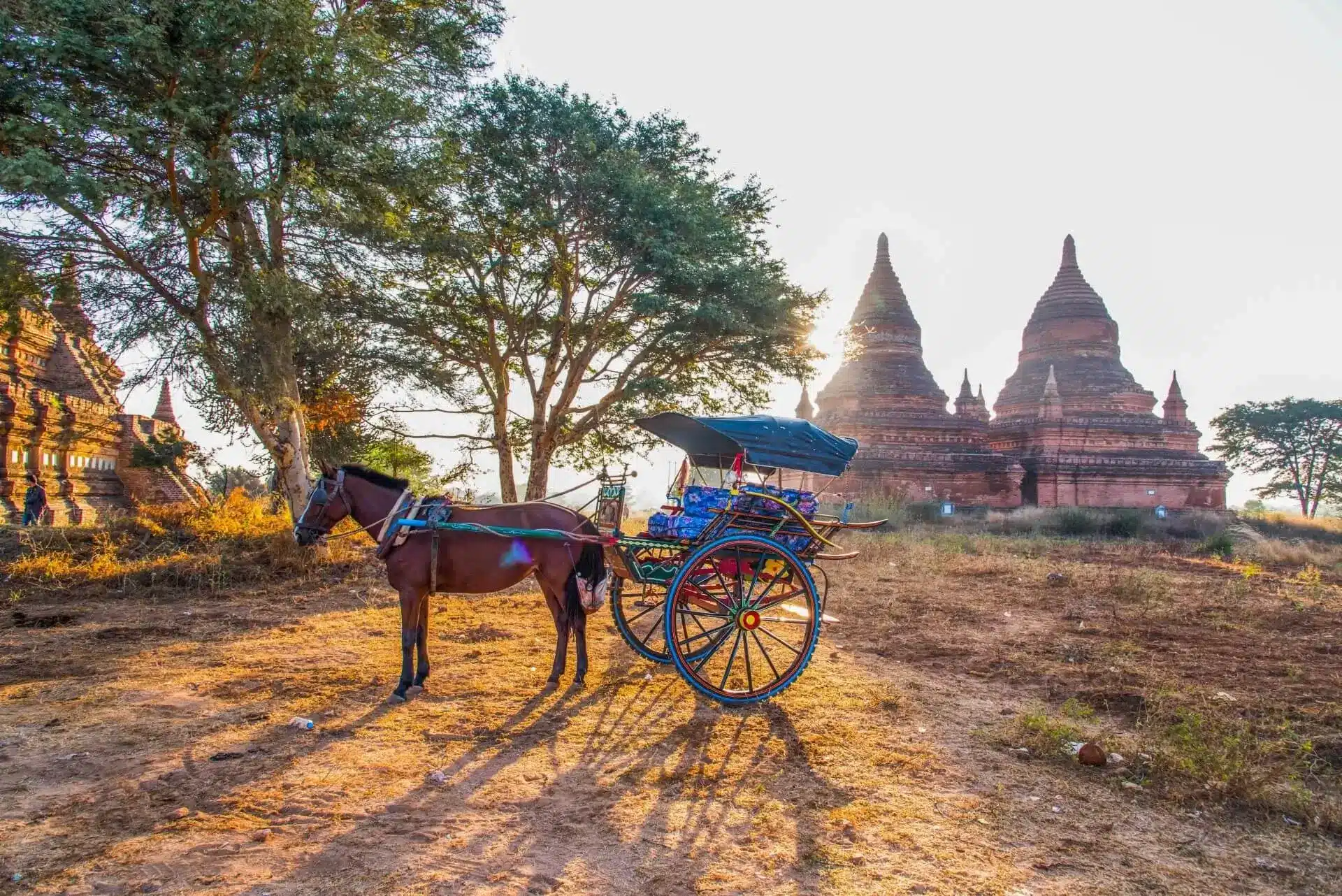
Once these two sites are finished, normally by late morning, the tropical heat of the Cambodian plains will begin to set in. At this point, take the opportunity to have lunch and avoid the intense heat, or cool off in your hotel’s pool. You can return to Angkor around 4 pm to give yourself some time before the end of the day and sunset. This temple, one of the most popular with tourists, remains a must-see during a day trip to Angkor. Nestled in the heart of the Cambodian jungle, you’ll see ruins still standing, eaten away by the famous kapok trees, those large white trees that take root through the temple stones. Awakening your adventurous spirit, Ta Prohm promises a true surprise and an inevitable sense of wonder at its ruins.
Located atop a hill, Phnom Bakheng offers a breathtaking view of the Cambodian plains from its highest point. It is the first temple built at the Angkor site and the prototype of the five-tiered mountain temples. From here, you can see the tips of the spires of Angkor Wat with binoculars and, above all, enjoy a sunset that sets the lush vegetation of the lost city ablaze. That’s a full and exciting day over, a day you won’t soon forget.
In this article, we present our three best Cambodia Thailand Tour itineraries: 12 days, 15 days and...
Visit Chiang Mai: sacred temples, authentic markets, lush nature Discover the cultural capital of...
Every year, at the end of the rainy season, Burmese devotees are seized by a kind of frenzy Some...
Have you ever heard of Burma Also known as Myanmar, this Southeast Asian country has remained...