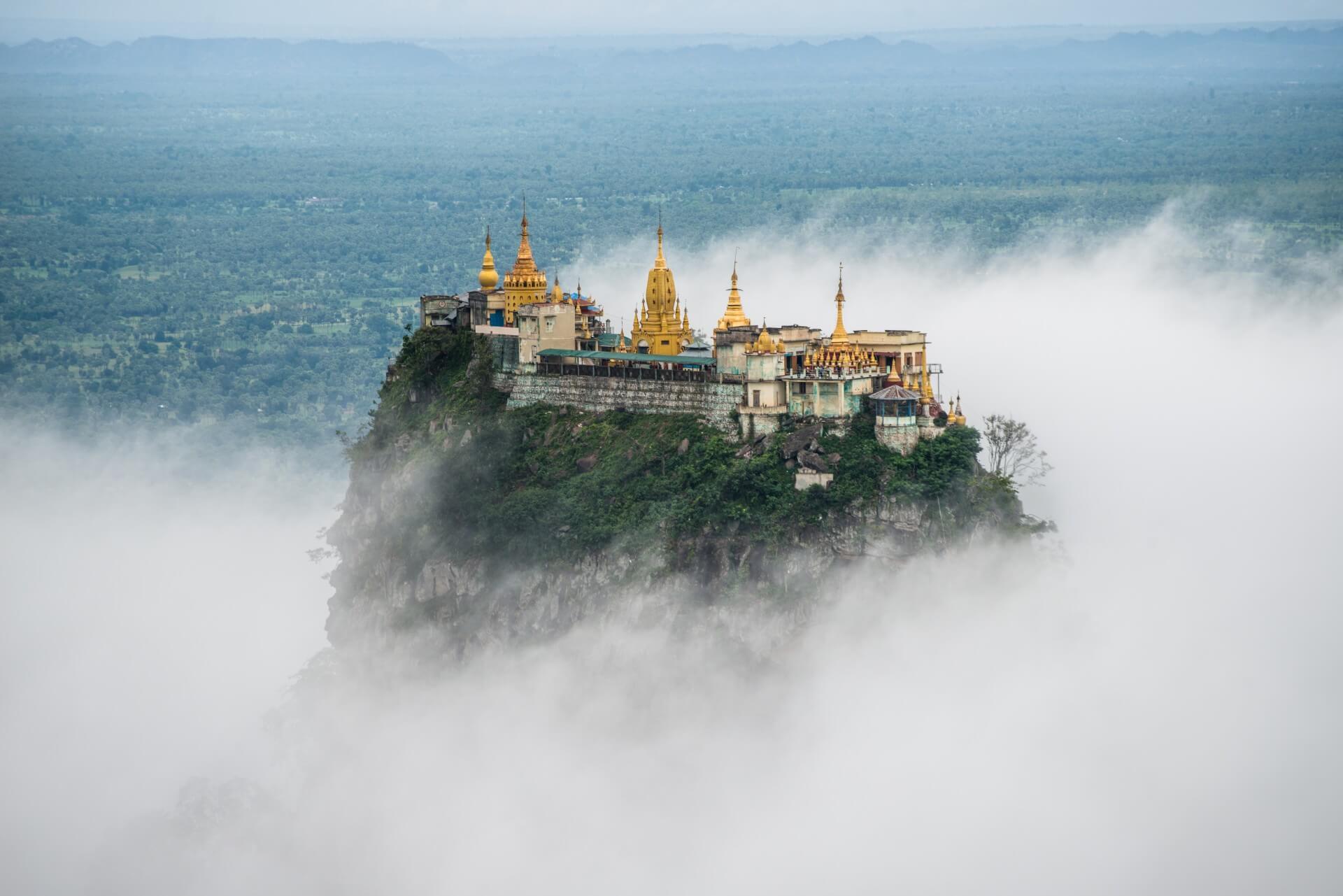
Far from being the most famous island, Koh Mak (or Ko Mak) in Thailand is one of those secret islands, preserved from mass tourism. Despite its small size, it is definitely worth a visit.
Nestled between the better-known islands of Koh Chang and Koh Kood near the Cambodian border, Koh Mak enjoys an exceptional geographical location. An ideal destination for a few days’ break on dream beaches during your trip to Thailand.
Discover our travel tips to find out what to see and do in Koh Mak, one of the most beautiful islands in Asia for your vacation in Thailand!
Where is Koh Mak located in Thailand?
Located in the Gulf of Thailand in the eastern part of the country, Koh Mak is one of the 52 islands of the Mu Ko Chang Marine National Park, the jewel of Trat province. It lies close to the Cambodian border.
Surrounded by the larger islands of Koh Chang and Koh Kood, Koh Mak is relatively less known than its two neighbors.
With a length of about seven kilometers at its widest point, Koh Mak is one of the few inhabited islands of the Koh Chang archipelago. Its topography sets it apart from neighboring islands with steep relief, as it is flat and has neither mountains nor dense jungle.
Koh Mak Island, a “green island” in Thailand
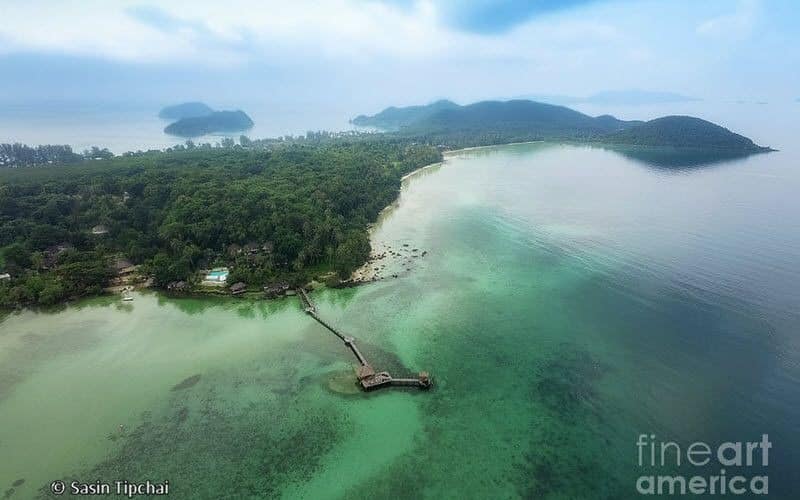
Although Koh Mak has welcomed tourists since the late 1970s, paradoxically its economy has always been centered on rubber tree (hevea) and palm cultivation rather than fishing.
Indeed, the first thing that stands out when visiting Koh Mak is the presence of numerous plantations. It is a green island where three types of trees dominate: palm trees, rubber trees, and coconut palms.
The island benefits from Koh Chang’s relief and climate, which provide regular rainfall that is beneficial for agriculture.
The palms are mainly betel palms or areca nut palms, called “mak” in Thai — hence the name Koh Mak.
Rubber tree cultivation, from which latex is extracted, occupies the entire eastern part of the island. While perfectly aligned trees may initially discourage lovers of wild landscapes, the cool shade they provide softens the atmosphere and protects from the tropical sun.
Alongside these two main agricultural activities, there are also coconut groves and pineapple plantations. The island’s iron-rich red soil and relatively flat terrain make it possible to cultivate large plots of land.
On Koh Mak, which has fewer than six hundred inhabitants, there is no major fishing port or fishing village — only a few boats. Unlike many other islands in Thailand, development here has not been driven by tourism at the expense of nature.
Instead, it has naturally focused on the promotion of a green heritage. While preserving forests, local authorities encourage initiatives related to environmental protection. Many guesthouses, hotels, and resorts have adopted recycling and waste sorting.
This ecological concern is embodied by Energy Farm, a recycling facility located in the heart of the island that processes many materials from daily waste. Plastic bottles, glass, cardboard, and paper are recovered, while part of the organic waste is turned into compost.
This environmental awareness is also reflected in the island’s urban planning. Development remains under control: there are no large complexes or buildings that overshadow the natural landscape, and the tallest construction does not exceed three stories.
Most accommodations and tourist facilities are located around three piers situated in the north, southwest, and southeast of the island.
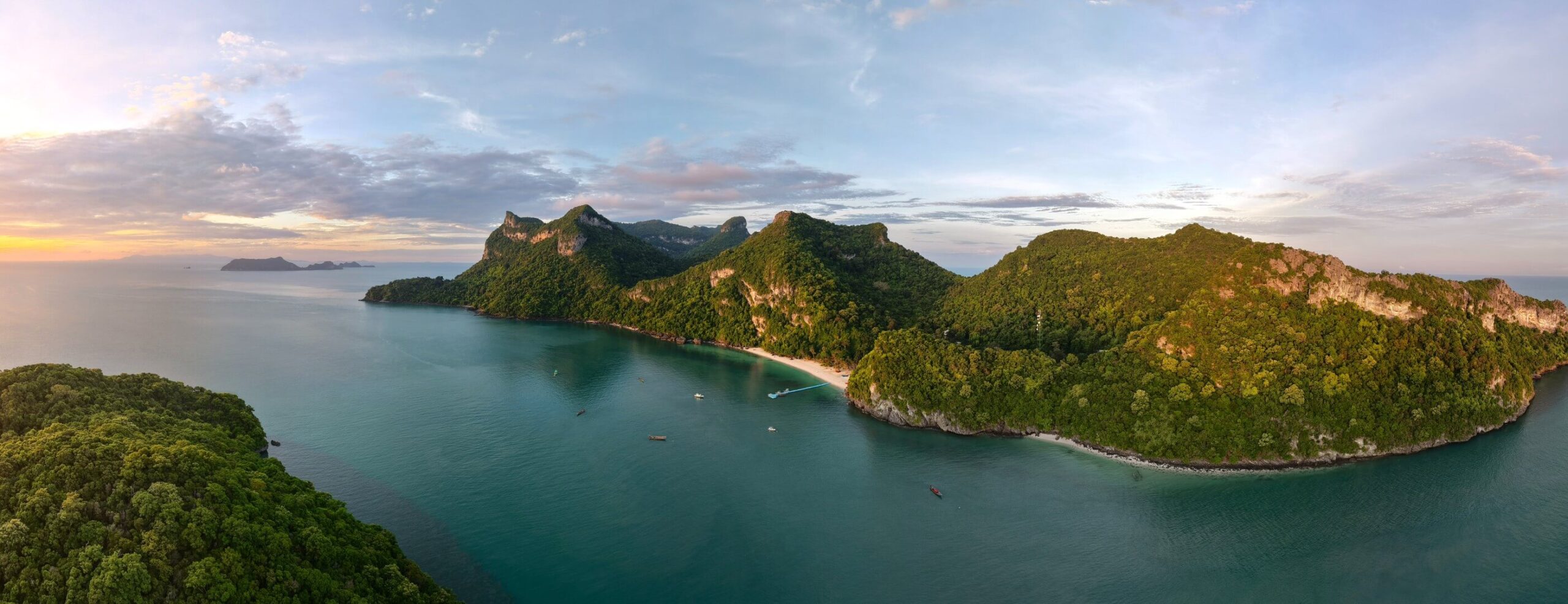
Koh Mak: dream beaches and crystal-clear waters
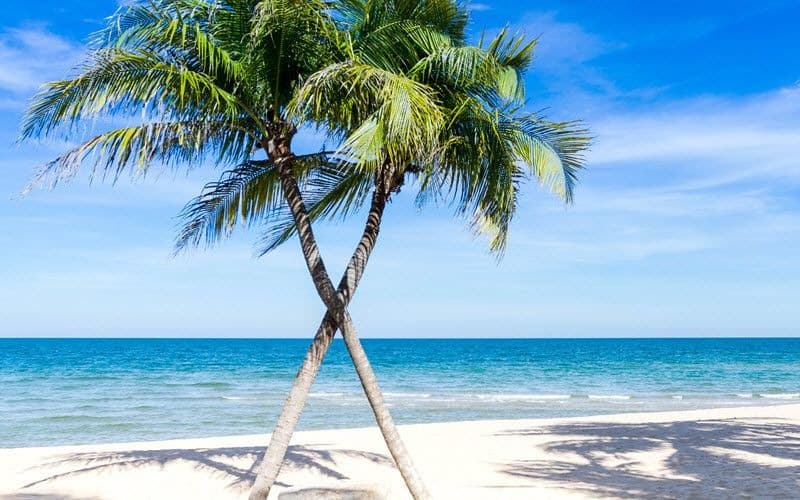
Koh Mak has several beautiful white-sand beaches with turquoise waters. The main thing to remember is that they are never crowded. There is no need to search for the least busy beach, as they are all relatively peaceful even during high season.
Ao Pra Beach in Koh Mak
Like Ao Suan Yai, Ao Pra Beach is probably one of the most beautiful beaches in Koh Mak. Perfect for watching the sunset, it offers a true postcard landscape. It is also where you will find some of the island’s most beautiful resorts with charming individual bungalows.
The Cococape Resort, built on a promontory of black volcanic rocks, separates the eastern part of Ao Suan Yai from the calm white sand beach of Ao Pra.
This resort has also built a long wooden pier where, at the end, there is a bar offering beautiful views of the surrounding bay. From there you can also observe and dive among many colorful fish.
From here, visitors can reach two small islands: Koh Pee, ideal for diving and observing coral and fish, and Koh Kham, which features a small palm-fringed beach and crystal-clear water. Two perfect excursions for an idyllic day.
Ao Kao Beach in Koh Mak
Another pleasant beach is Ao Kao on the southwest coast of the island, where many resorts with bungalows of varying styles and prices are located.
This area serves as the island’s small center, with restaurants, grocery stores, and a pharmacy. It is the liveliest area of the island, where many visitors gather for dinner or a relaxed evening.
From Ao Kao Beach, many tourists take a small boat or rent a canoe to reach two nearby islands: Koh Rayang Nai, where a small chedi can be seen, and Koh Rayang Nok.
This small islet is a perfect spot for both diving and spending a day on a private beach (100 baht entrance fee) under the shade of palm trees while listening to the waves. A bar serves cocktails and fruit shakes.
Ao Tann Beach in Koh Mak
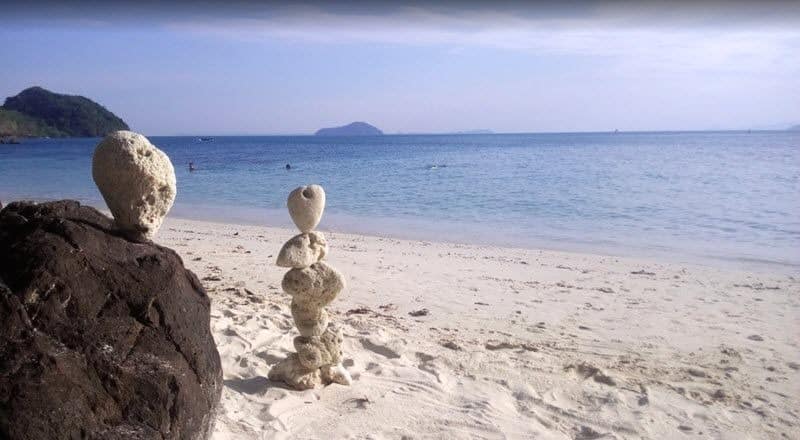
The eastern tip of Koh Mak is the wildest part of the island. This is where Ao Tann Beach is located, with three resorts and a few houses.
From this beach, you can reach Koh Kradat Island, home to an endemic species of small wild deer that can easily be observed.
The island itself is a peaceful haven. A long beach with three resorts competes for the few tourists who make the journey there.
Laem Son Beach in Koh Mak
Laem Son Beach is where the residents of Koh Mak come to swim with their families, picnic, or barbecue under the shade of tall pine trees, away from tourists.
A few small huts sell drinks and simple dishes at very affordable prices. From this beach, it is also possible to reach Koh Kradat by boat or canoe, and you can usually find someone willing to take you there for the day on a long-tail boat.
Ao Pai Beach in Koh Mak
Next to the Ao Nid port, you will find Ao Pai, another long beach with reddish sand and stones. It is pleasant for walking with a beautiful view of Koh Kood, although it is not ideal for swimming.
Baan Lang Beach in Koh Mak
Finally, the long Baan Lang beach winds between black limestone formations and mangroves. The view of the sunset is simply stunning.
The colors of the landscape create remarkable photo opportunities. There are very few buildings here, only a landscape sculpted by nature where human development has not yet left a lasting mark.